Tripura is often introduced through its palaces, lakes and temples. But beyond the well-known attractions, hidden among green hills and quiet villages, lives a community that has protected its traditions for generations.
The Bru (Reang) community, one of the oldest Indigenous communities of Northeast India, continues to preserve a way of life deeply connected to nature, family and tradition. Their culture isn't something that comes alive only during festivals. It can be seen in the homes they build, the food they prepare, the songs they sing and the stories they pass on from one generation to the next.
Many travellers visit Tripura without ever meeting the people who have shaped its cultural identity for centuries.
I was fortunate enough to spend a day with them.
Not as someone standing behind a camera.
But as a guest inside their home.
And somewhere between conversations, traditional food and music, I realised that this wasn't simply a village visit.
It was a lesson in how culture survives.
The Road to a Different World
The journey itself begins long before you reach the village.
Leaving behind the busy streets, the road slowly winds through forests, rolling hills and scattered settlements. As the scenery changes, so does the pace of life.
The sounds of traffic fade away.
Fresh air replaces the noise of the city.
The landscape becomes greener with every kilometre.
There is something calming about travelling through the hills of Tripura. It reminds you that not every journey is about reaching a destination quickly.
Sometimes, the journey prepares you for what lies ahead.
When we finally arrived, there was no grand entrance.
No ticket counter.
No stage.
Just bamboo homes standing quietly among the trees and people going about their everyday lives.
It felt less like arriving at a tourist destination and more like being welcomed into someone's neighbourhood.
A Home Called Charnok
The first invitation came with a smile.
"Come inside."
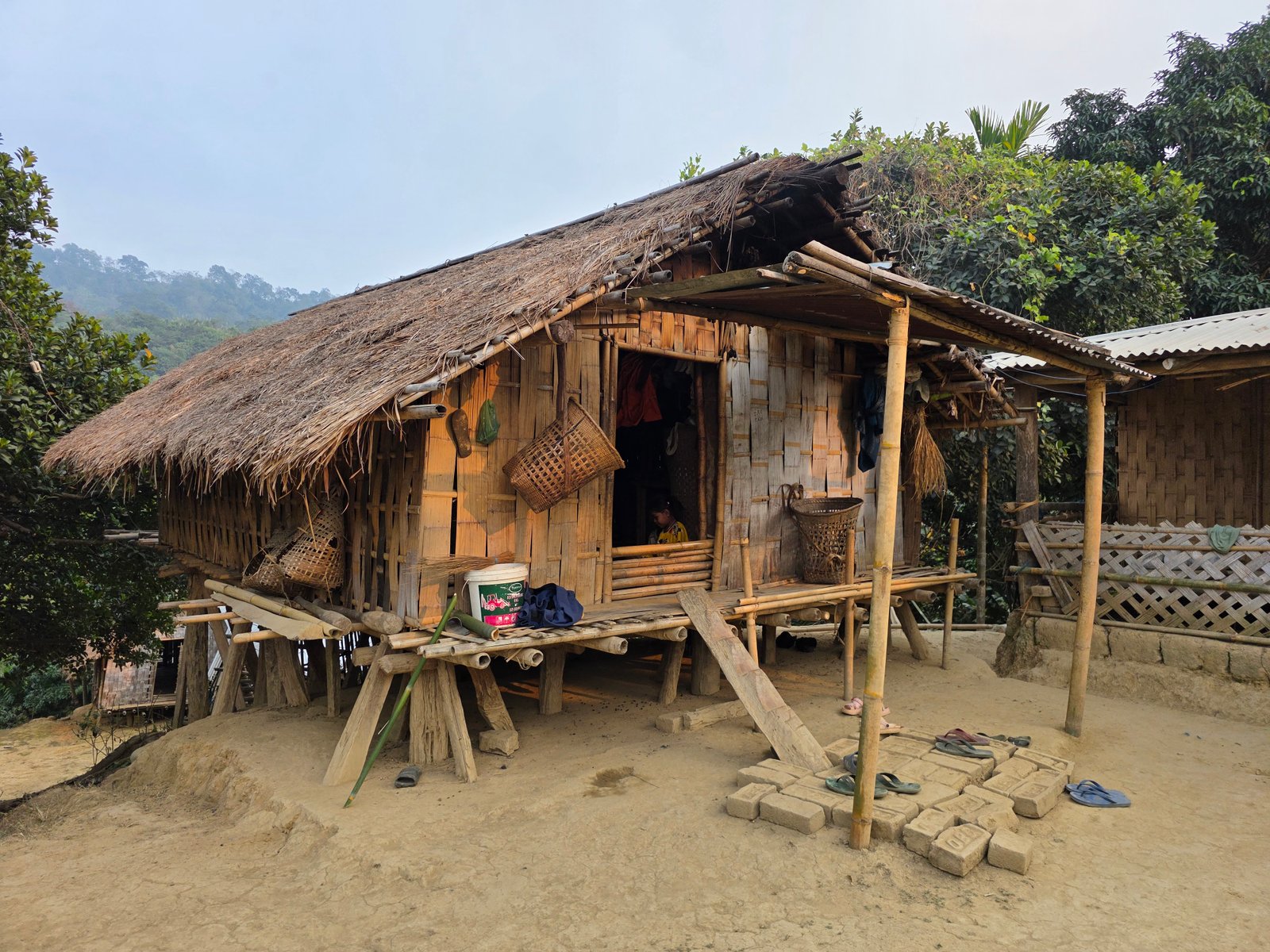
The house stood on a raised platform, built almost entirely from bamboo and other locally available materials. This traditional home, known as a Charnok, has been part of Bru life for generations.
Stepping inside, I noticed how simple everything was.
Bamboo walls allowed sunlight to filter gently into the room.
The floor creaked softly beneath our feet.
The smell of firewood drifted in from the kitchen.
There was nothing extravagant.
Yet everything felt warm.
Every corner of the house reflected practical wisdom developed over generations. Built using materials from the surrounding forests, the Charnok is designed to suit the local climate while staying closely connected to nature.
In cities, homes often separate us from the outdoors.
Here, the home seemed to exist as part of the forest itself.
Where Every Object Has a Story
As we sat inside, my eyes wandered around the room.
Handwoven baskets rested neatly in one corner.
Bamboo tools hung from the walls.
Traditional household items, shaped by hand rather than machines, quietly reflected years of craftsmanship.
Nothing looked unnecessary.
Every object had a purpose.
Every object had a story.
Then I noticed the women.
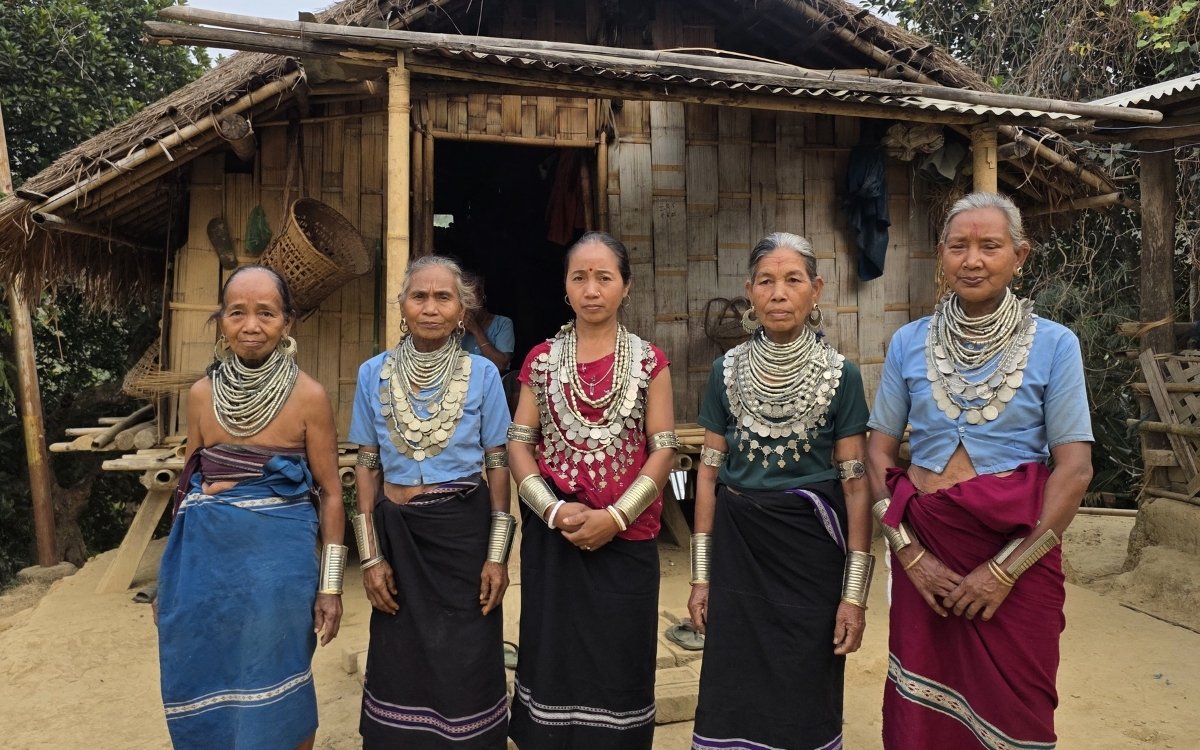
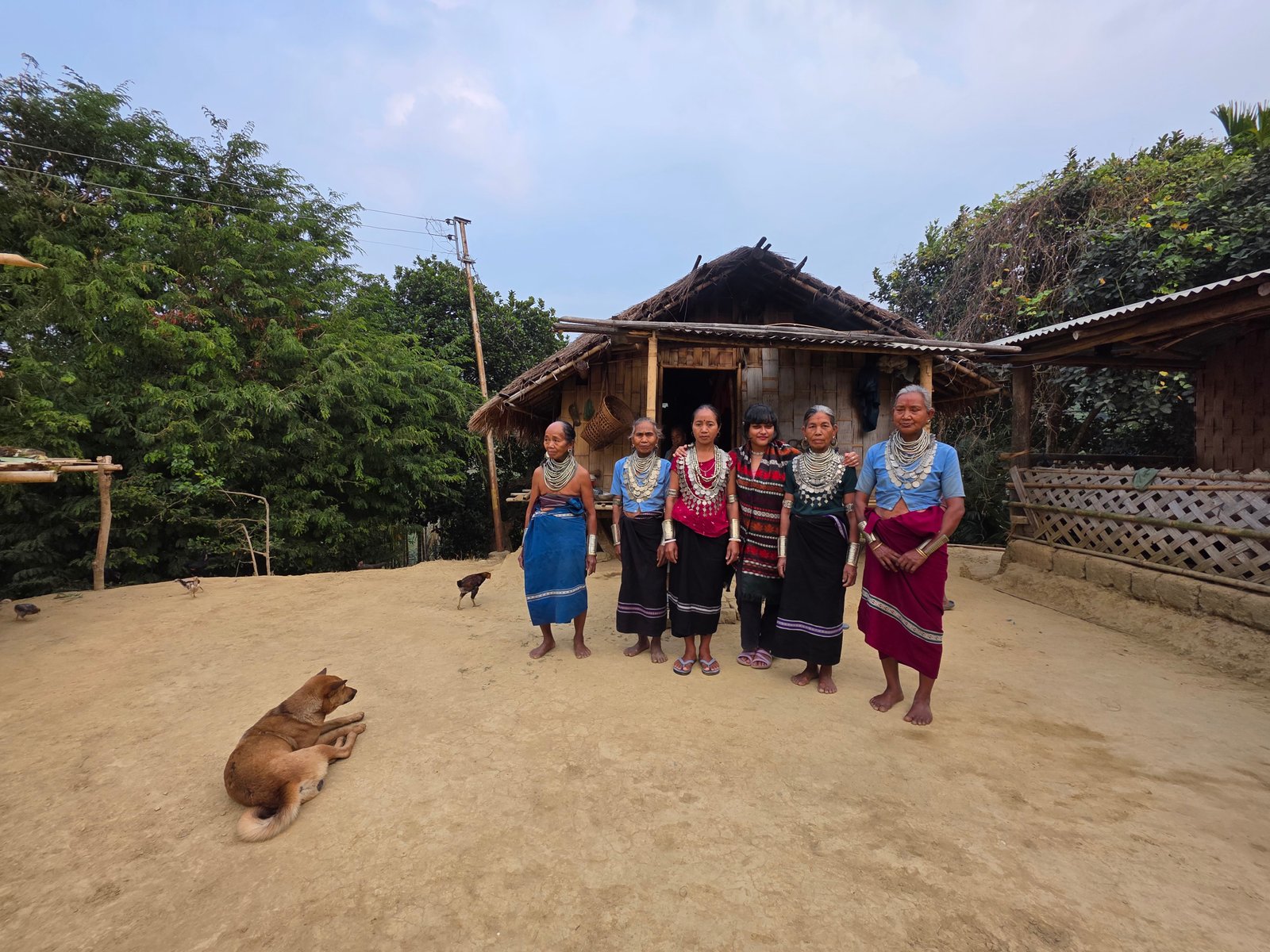
Their traditional attire immediately stood out, but what drew my attention even more was their jewellery.
Layer upon layer of beautifully crafted ornaments rested around their necks.
Large circular earrings reflected the light entering through the bamboo walls.
Metal bangles decorated their wrists.
These weren't simply beautiful accessories.
They were symbols of identity, tradition and community.
In many parts of the world, fashion changes every season.
Here, tradition continues to be worn with pride.
Without saying a word, their appearance already told the story of a culture that refuses to disappear.
The Kitchen Where Traditions Are Cooked
Soon, the conversations moved towards the kitchen.
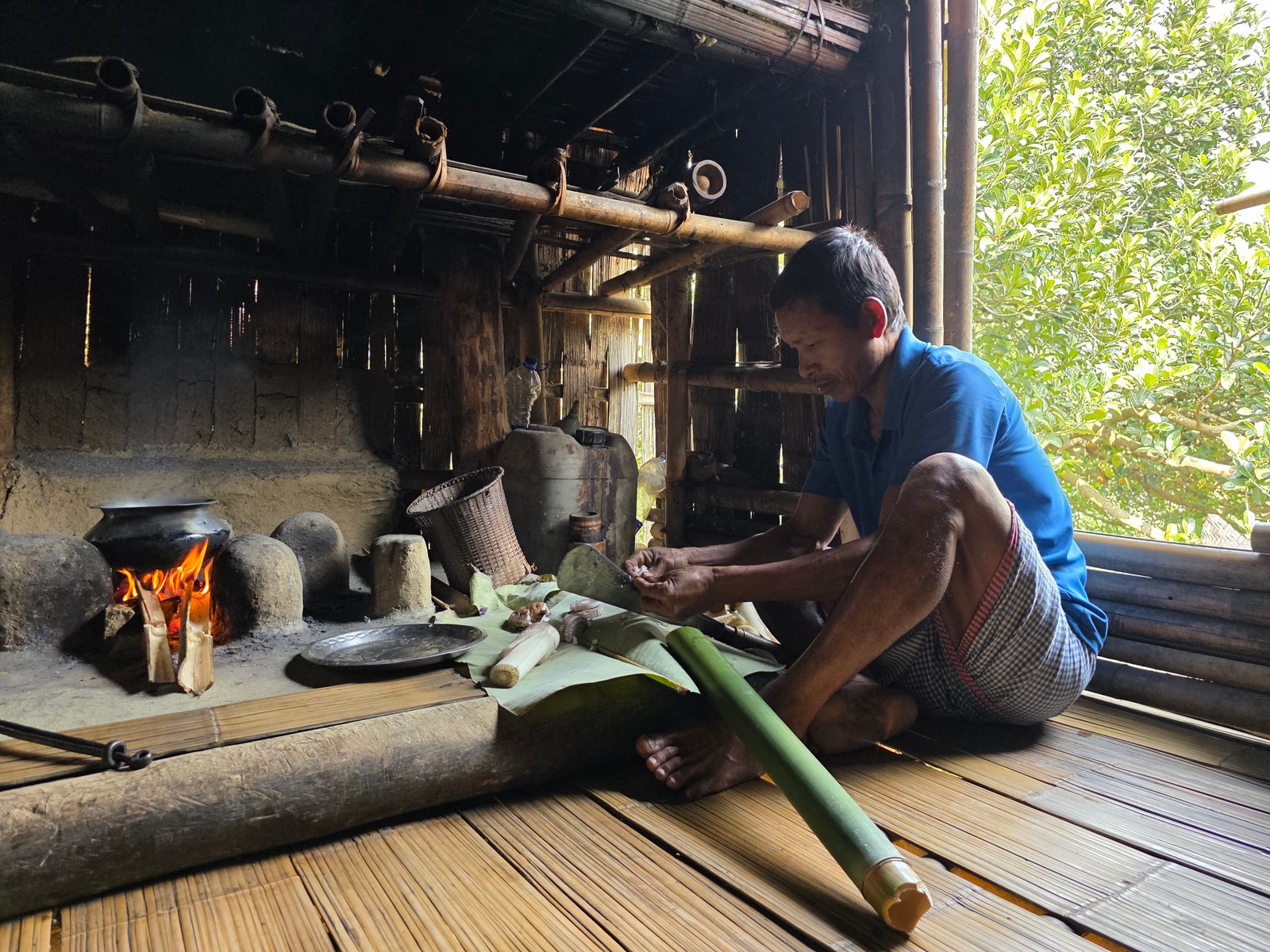
The aroma of wood smoke filled the house as preparations quietly began.
Fresh vegetables.
Rice.
Forest herbs.
Ingredients gathered from nearby fields.
Nothing arrived in plastic packets.
Everything came from the surrounding landscape.
There were no measuring cups.
No written recipes.
Only experience passed from one generation to another.
Watching them cook felt like watching history unfold.
One of the first dishes they introduced us to was Bangui, a traditional rice cake prepared with remarkable care.
Nearby, Gudok slowly cooked over the fire while fresh Mosdeng was prepared alongside it.
Every movement felt familiar.
Not because someone had practised for visitors.
But because these recipes had been part of everyday life for generations.
The meal wasn't prepared to impress us.
It was prepared to welcome us.
And perhaps that is what made it unforgettable.
The Kitchen Where Every Recipe Tells a Story
The kitchen was unlike any I had seen before.
There were no modern appliances.
No shelves filled with packaged ingredients.
No rush to prepare the meal.
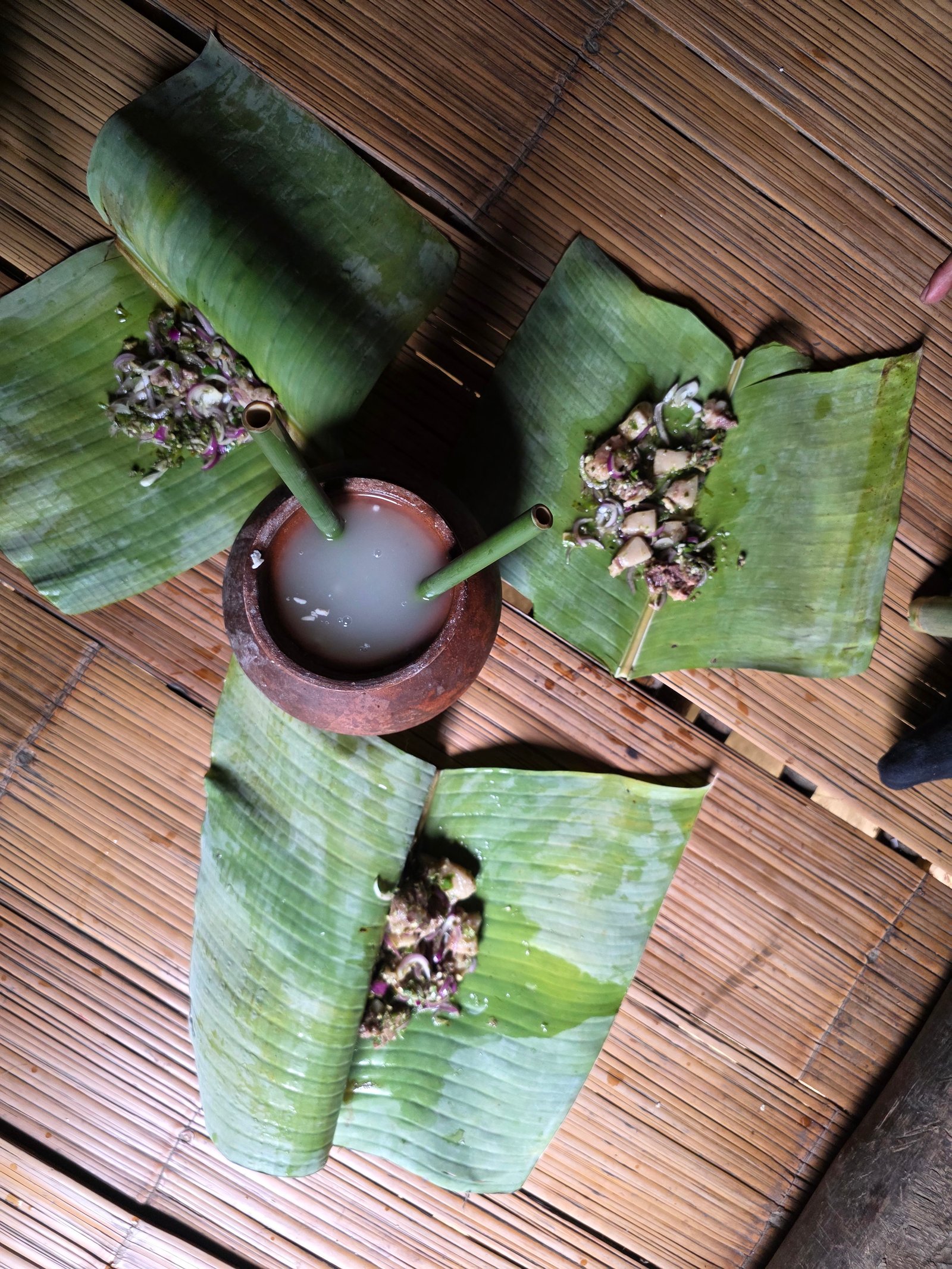
Instead, there was the comforting sound of firewood crackling beneath a clay stove, the aroma of fresh herbs, and hands that had learned these recipes long before they were ever written down.
Food here wasn't just about satisfying hunger.
It was about preserving memory.
One of the first dishes prepared for us was Bangui, a traditional rice cake that has been enjoyed by the Bru community for generations. Simple in its ingredients but rich in tradition, it represents the beauty of cooking with patience rather than perfection.
Nearby, Gudok slowly simmered over the fire, while Mosdeng, one of Tripura's most loved traditional accompaniments, was freshly prepared using local ingredients.
Watching the women cook wasn't like attending a cooking demonstration.
There were no measurements.
No recipe books.
Every movement came naturally, guided by years of experience.
Some recipes survive because they are written down.
Others survive because they are lived every single day.
A Toast to Friendship
Once the food was ready, another tradition followed.
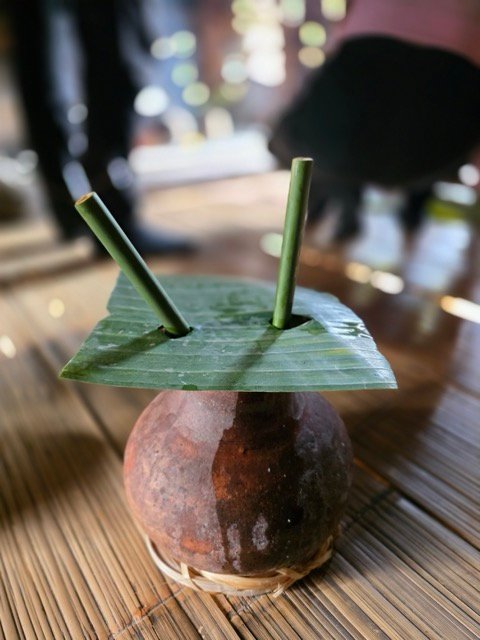
A cup of locally brewed rice beer was gently offered.
Not as a performance.
Not as something unusual.
Simply as a gesture of hospitality.
Across many Indigenous communities of Northeast India, welcoming guests with food and drink has always been a way of expressing warmth and respect.
Sitting together, sharing a meal and listening to stories created a feeling that is difficult to describe.
It no longer felt like we were visitors.
For a brief moment, we simply felt like part of the gathering.
Life Between the Hills and the Forest
As conversations continued, we learned more about everyday life in the village.
For generations, many Bru families have practised Jhum cultivation, a traditional farming system that has shaped life in these hills.
Their relationship with nature goes far beyond farming.
The forest provides bamboo for building homes.
Medicinal plants.
Firewood.
Wild vegetables.
Everything is used with care and respect.
Living here means understanding the seasons, the land and the rhythm of nature.
Perhaps that is why life feels slower here.
Not because people have less to do.
But because nature decides the pace.
When the Village Began to Sing
As the afternoon slowly turned into evening, something beautiful began to happen.
The quiet village slowly filled with music.
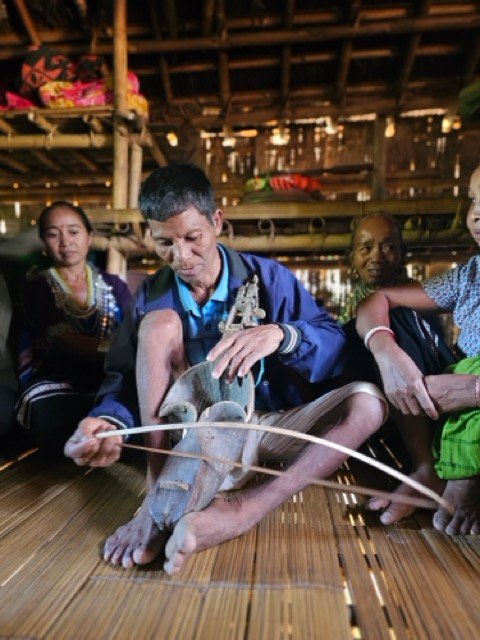
Someone picked up a traditional instrument.
Another person joined in.
Soon, the sound echoed through the bamboo houses.
There was no stage.
No bright lights.
No audience waiting for a performance.
This wasn't entertainment.
It was life.
The songs carried stories that had travelled through generations.
Stories of harvests.
Of celebrations.
Of family.
Of the hills they have called home for centuries.
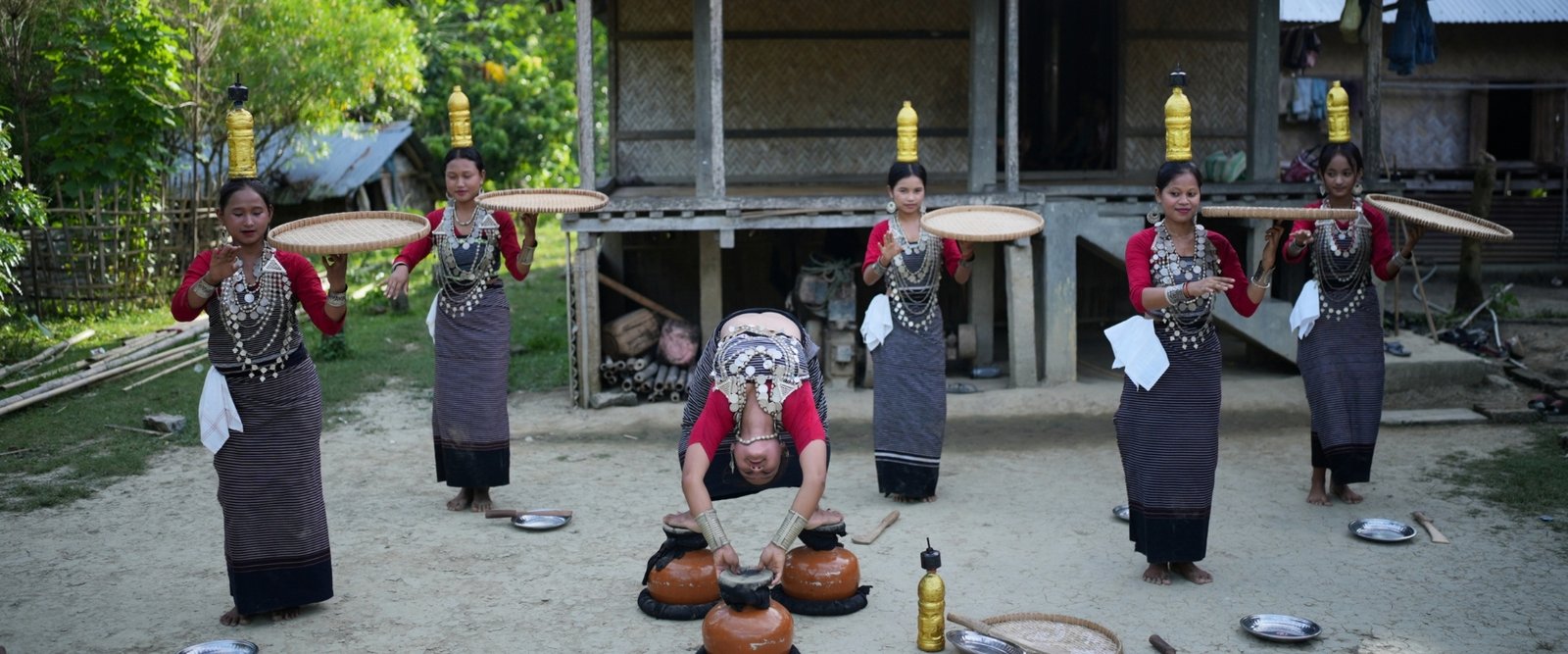
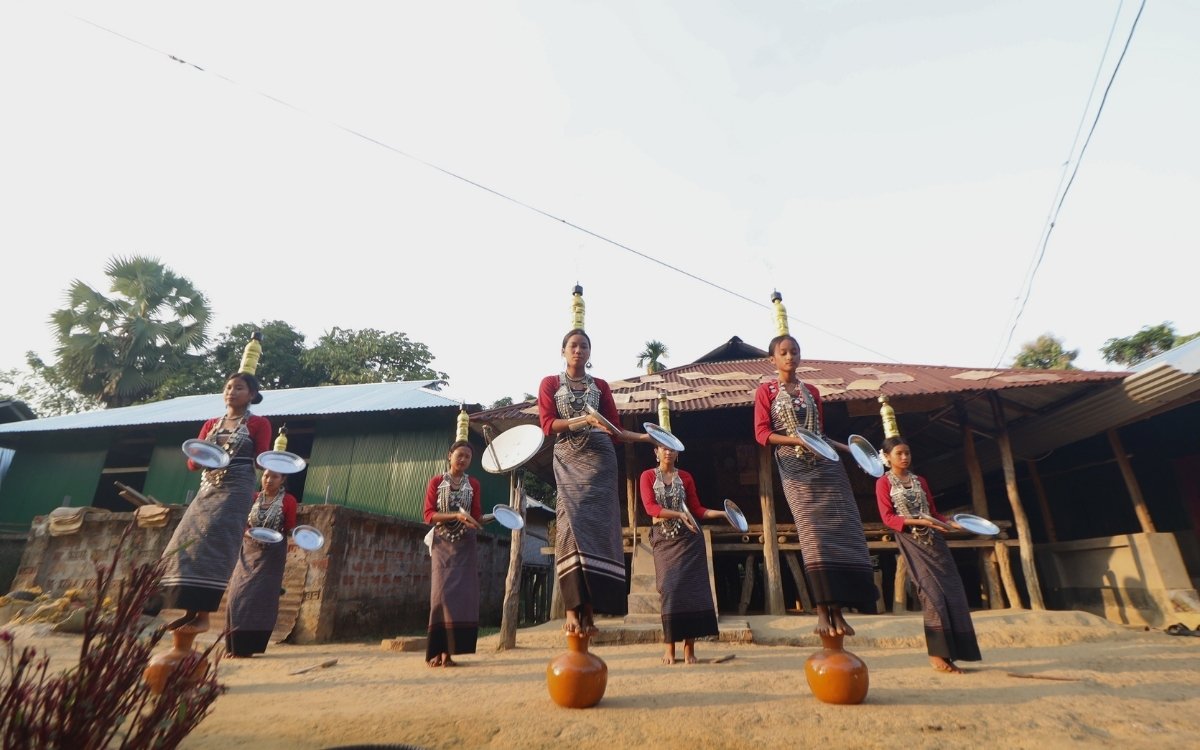
Then the dancing began.
Young and old stood together.
Children watched carefully, learning every step by simply being present.
That is how traditions survive.
Not through books.
Not through museums.
But through people who continue to practise them.
More Than a Village Visit
By the time the sun began to disappear behind the hills, I realised something.
We hadn't spent the day watching a cultural programme.
We had spent the day understanding a way of life.
There is a big difference.
Culture cannot truly be experienced from a chair while watching a performance.
It is experienced while sitting inside someone's home.
Sharing a meal.
Listening to stories.
Laughing together.
Learning without anyone trying to teach.
That day wasn't about sightseeing.
It was about connection.
The Soul of Tripura Lives Here
When most people think about travelling, they think about places.
Beautiful landscapes.
Historic monuments.
Famous attractions.
But long after those memories begin to fade, it is often the people who stay with us.
The grandmother who taught us how to prepare Bangui.
The family who welcomed strangers as guests.
The children who smiled without hesitation.
The music that echoed through the bamboo village.
The traditions that continue to live because an entire community chooses to keep them alive.
The Bru (Reang) community reminded me that culture is not something we simply inherit.
It is something we protect.
Every story shared.
Every meal prepared.
Every song sung.
Every tradition passed to the next generation is an act of preservation.
Experience the Soul of Tripura
If you believe travel is more than ticking destinations off a list, this is an experience worth seeking.
Through our Soul of Tripura journey, Northeast Travel Experts invites you to spend time with the Bru (Reang) community, step inside a traditional Charnok, learn to prepare Bangui, taste authentic dishes like Gudok and Mosdeng, enjoy local music and dance, and experience a culture that continues to thrive in the hills of Tripura.
Because the most meaningful journeys are not measured by the number of places you visit.
They are measured by the stories you carry home.